
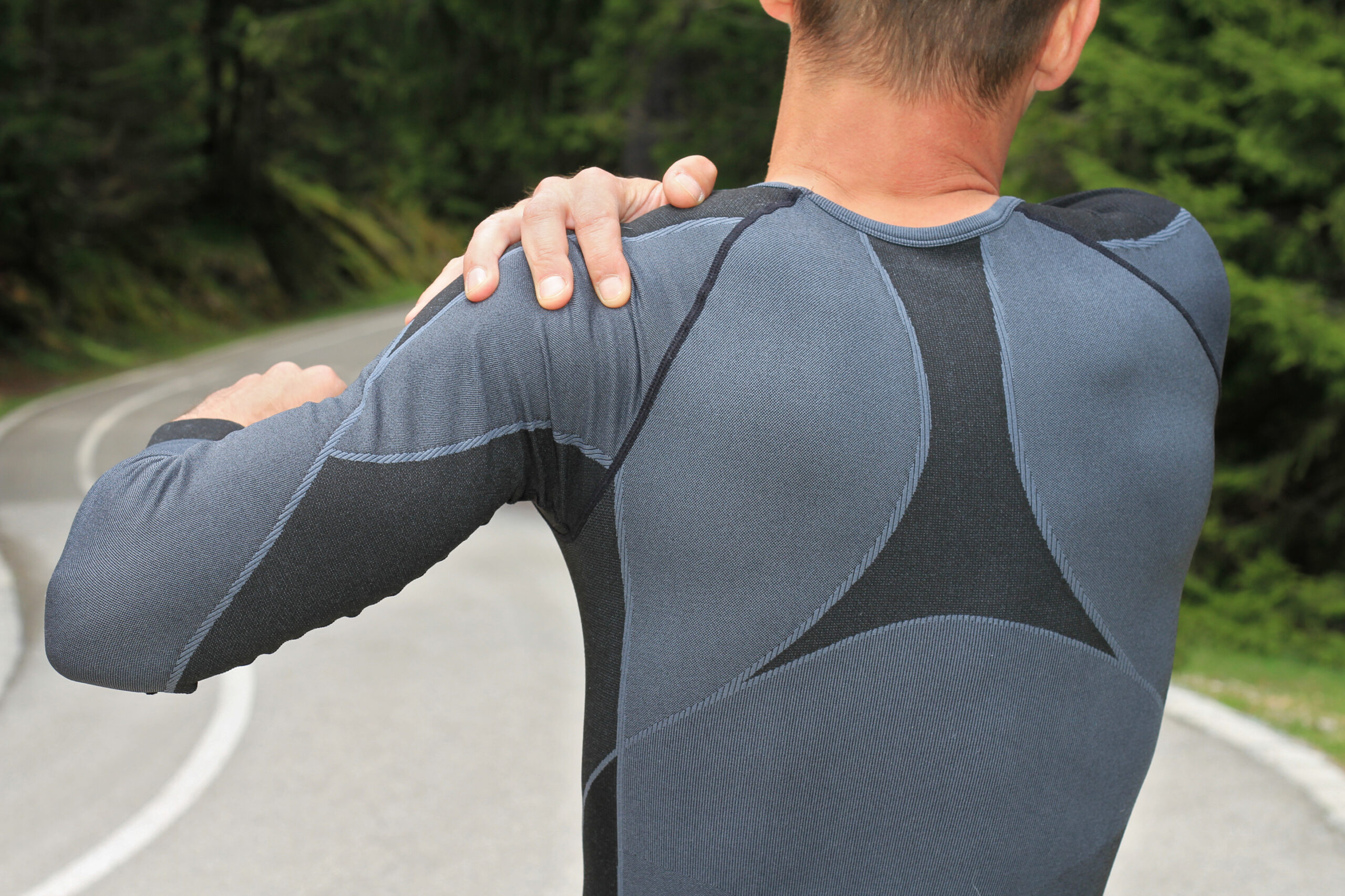
Repairing a torn rotator cuff is only part of the job. During surgery, Dr. Michael Schicker can reattach the torn tendon to the bone, but the long-term success of the repair also depends on what happens afterwards: the tendon has to heal securely back onto the bone.
A number of factors can affect that healing process, and even a technically successful repair can sometimes tear again. This is one of the reasons there is growing interest in using PRP orthopedic treatment during rotator cuff repair.
Most patients who have heard of PRP probably associate it with injections given as an alternative to surgery. Its role during rotator cuff repair is quite different. PRP can be applied around the area where the tendon has been reattached, with the aim of creating a more favorable biological environment for healing.
This doesn’t change the fundamental purpose of the operation. The surgery repairs the torn tendon; PRP is an additional treatment that may help support the healing that follows.
Adding Biological Support to a Surgical Repair
PRP is prepared from a sample of the patient’s own blood. Processing the blood produces plasma containing a concentrated level of platelets, which release growth factors and other biologically active substances involved in the body’s response to injury and tissue repair.
During rotator cuff surgery, sutures and anchors are used to return the torn tendon to the bone and hold it in position. PRP can then be introduced around this tendon-to-bone interface.
The rationale is relatively straightforward. Surgery provides the mechanical repair, while PRP is intended to influence the biological environment in which that repair has to heal. Researchers have been investigating whether this makes a meaningful difference, particularly to the likelihood of the tendon remaining intact after surgery.
Rotator Cuff Tears and the Challenge of Healing
The rotator cuff is a group of muscles and tendons surrounding the shoulder joint. Together, they stabilize the shoulder and allow the arm to lift and rotate.
A rotator cuff tendon may tear suddenly through injury or deteriorate gradually through wear and degeneration. The effect varies considerably. Some patients have manageable discomfort, while others experience persistent pain, weakness, restricted movement, disturbed sleep, and difficulty with work, sports or ordinary daily activities.
Not every rotator cuff tear needs to be operated on. Before recommending surgery, Dr. Schicker considers the size and type of tear, symptoms, strength and function, previous treatment, age, activity level and what the patient wants or needs to get back to doing.
Where surgical repair is appropriate, the torn tendon is reattached to the upper arm bone. The body then has to establish a durable biological connection at the repair site. The size and characteristics of the tear, the condition of the tendon and individual patient factors can all affect this process.
This is the particular problem that PRP augmentation is intended to address. It is not there to replace the sutures, anchors or surgical technique, but to add a biological component at the site where tendon-to-bone healing needs to take place.
What the Research Has Found
There is now a substantial body of research into the use of PRP during rotator cuff repair, including randomized controlled trials and systematic reviews that combine findings from multiple studies.
A 2024 systematic review and meta-analysis examined 21 randomized controlled trials involving 1,359 patients. Across those studies, rotator cuff retears occurred in 16.5% of patients treated with PRP compared with 23.6% in the control groups. The researchers also found some improvements in measures of shoulder function and pain, although these were not consistent across all measures and follow-up periods.
Another study in the same year looked more closely at 96 patients undergoing arthroscopic repair of rotator cuff tears measuring less than 3 cm. In this double-blind randomized controlled trial, half the patients received leukocyte-poor PRP at the tendon-to-bone interface during surgery, while the remainder underwent the surgical repair without PRP.
MRI scans six months later found a retear rate of 15.2% in the PRP group and 34.1% in the control group. What makes this finding particularly interesting is that the difference in structural healing was not matched by a significant difference in the patients’ reported pain or functional outcomes.
An earlier systematic review and meta-analysis of 25 clinical trials reached a broadly similar conclusion. PRP was associated with a statistically significant reduction in retear risk, but improvements in measures such as pain and function were small enough for the researchers to question their practical clinical significance.
Taken together, these studies point to an important distinction when discussing PRP with patients. Its potential benefit during rotator cuff repair may be more apparent in the integrity of the repaired tendon than in how quickly or dramatically the shoulder feels better.
Structural Healing and the Patient’s Recovery
At first glance, it may seem odd that a treatment could reduce the number of retears without producing an equally striking difference in pain or shoulder function. In practice, the two outcomes measure different things.
An MRI can tell us whether a repaired tendon remains structurally intact. A patient’s experience after shoulder surgery is affected by much more than that. Pain, strength, movement and overall function can be influenced by the original injury, rehabilitation, and numerous individual factors.
This is why the research needs to be interpreted carefully. The evidence does not support promising that adding PRP will make rotator cuff surgery less painful, shorten the recovery period or necessarily produce a shoulder that feels noticeably better. What it does suggest is a potentially valuable role in reducing the risk of the repaired tendon tearing again.
That is a different benefit, but potentially an important one.
Not All PRP Is the Same
One difficulty in interpreting PRP research is that the term does not describe a single standardized preparation. Platelet concentrations can differ, as can white blood cell content, processing methods and the way PRP is applied during surgery.
The rotator cuff injuries included in studies vary as well. A relatively small tear and a large or complex tear do not necessarily have the same healing potential or respond in the same way.
For example, the 2024 randomized trial that found retear rates of 15.2% with PRP and 34.1% without it specifically involved tears smaller than 3 cm, and used leukocyte-poor PRP at the tendon-to-bone interface. It would be wrong to assume that the same result applies to every rotator cuff repair or every form of PRP.
Research is continuing to refine which patients, types of tear and PRP preparations are most likely to benefit.
Where PRP Fits Into the Treatment Decision
For a patient with shoulder pain, deciding whether PRP should be used during surgery is several steps down the road.
The starting point is an accurate diagnosis. If the rotator cuff is torn, Dr. Schicker will determine whether the injury can reasonably be treated without surgery or whether repair is appropriate. Only when surgery is being considered does the question of PRP augmentation arise.
At that stage, the characteristics of the tear, the quality of the tissue and factors affecting the individual patient’s healing can all contribute to the decision. PRP does not need to be added routinely to every rotator cuff repair simply because it is available. Its value lies in using it selectively where there is a sound clinical reason to believe that additional biological support may be worthwhile.
This also illustrates a broader point about PRP in orthopedic treatment. It is often discussed as a way of treating an injury without surgery, but that is not its only potential role. In rotator cuff repair, PRP and surgery are not competing treatments: they are doing different jobs as part of the same treatment.
Discussing Your Rotator Cuff Treatment With Dr. Schicker
Shoulder pain, weakness, restricted movement or pain at night can have many causes, so treatment should begin with establishing exactly what is wrong rather than deciding in advance whether PRP or surgery is needed.
Dr. Schicker can assess your shoulder, explain whether the rotator cuff is involved and discuss the treatment options appropriate to the injury. Where a torn rotator cuff requires surgical repair, he can also discuss whether there is a role for PRP in supporting the healing of that repair.
Schedule a consultation with Dr. Michael Schicker to have your shoulder assessed and discuss the treatment options that may be appropriate for your rotator cuff injury.