
For people who experience life-changing musculoskeletal issues (tendon, joint, cartilage, ligaments, soft tissue), there are myriad challenges. Not only in terms of managing pain, which can seriously impact both a person’s physical and mental well-being and quality of life, but also from the difficult decisions that need to be made to facilitate a successful treatment plan and a return to smooth movement.
When patients come to orthopedic surgeon Dr. Schicker seeking help with injury, pain, or restricted movement, a thorough consultation and diagnosis are the first vital steps to understanding their own condition. They are then empowered to make an informed decision on the most appropriate treatment going forward.
Sometimes less invasive physical therapy is recommended as an effective solution to mild or early cases of a condition and for other, more advanced cases, surgical intervention may be the only way forward.
Sitting in between, corticosteroid injections and PRP (Platelet-Rich Plasma) orthopedic treatment are two modalities used successfully for multiple conditions. Due to the perceived similarities between the two (both are delivered by injection directly to the site), a question that often arises from patients is: “is PRP or a cortisone injection best for me?”
Most people are familiar with orthopedic surgeons’ use of cortisone injections for pain relief, but PRP is not as well understood.
What is PRP?
PRP orthopedic treatment is by no means a new concept, and has been used for over 40 years in one form or another. But it has gained in popularity over the past decade or so, with orthopedic surgeons achieving excellent results in the treatment of a range of musculoskeletal conditions, including injuries and chronic joint, muscle, tendon, or ligament pain.
It’s important to note, though, that PRP should not be seen as some kind of “quick fix”, and it isn’t suitable for every condition. Dr. Schicker will only recommend PRP as a treatment option after thorough consultation with the patient, taking into account a clear understanding of their condition (including its stage of progression) alongside their lifestyle, long-term health goals and expectations.
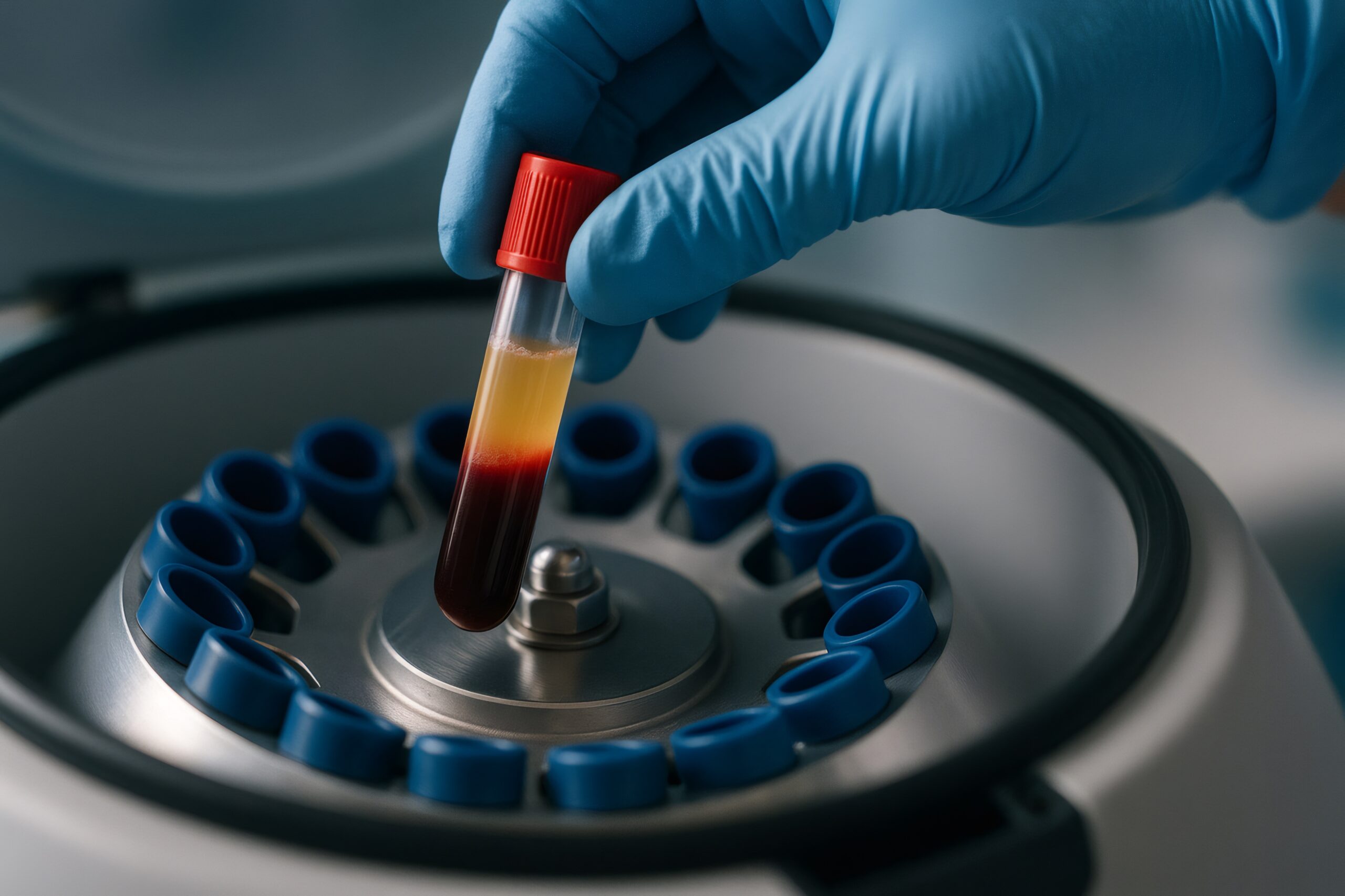
The process itself is quick (taking around 20 minutes), safe, and performed in Dr. Schicker’s clinic. It works by taking a small sample of the patient’s blood, which is then put into a centrifuge device and spun at high speed to separate the red and white blood cells from the platelets and plasma.
The concentrated platelet and plasma liquid is then injected back into the area of the patient that requires treatment, with one or more injections recommended.
PRP Works With Your Body’s Natural Healing
Platelets play a vital role in the body’s natural healing response. By concentrating them and injecting them into the affected site, the PRP process effectively delivers them directly to where they’re needed — stimulating and accelerating the healing process, rather than simply masking symptoms of pain.
This can lead to long-term results in reducing inflammation, improving function, a reduction in pain, a delay in the progression of degeneration, and a return to unimpeded movement.
What Conditions Can PRP Treat?
PRP can be highly effective in treating many musculoskeletal conditions involving tissue damage or inflammation as an alternative to the shorter term effects of steroid injections or more invasive surgical interventions. These include:
- Joint (arthritic) pain in the shoulder, hip, and knee
- Soft tissue injuries and muscle strains
- Osteoarthritis
- Plantar fasciitis
- Torn ligaments and ligament irritation
- Tendon injuries (rotator cuff, Achilles tendon)
- Tennis elbow, golfer’s elbow, and patellar tendinitis
Our guide to specific conditions that may be treated with PRP is a useful starting point for more information.
How is PRP Different from a Cortisone Injection?
Cortisone injections and PRP are both used as treatment options for muscle and joint conditions for the relief of pain and a return to movement. Both can be an effective and appropriate option, depending on the individual patient, but PRP is being increasingly offered by orthopedic surgeons due to its long-term benefits and the positive outcome for patients with chronic or degenerative conditions.
In the simplest terms, a corticosteroid injection uses synthetic steroids to provide short-term relief from pain, swelling and inflammation, whereas PRP is a regenerative method, using the patient’s own blood components to stimulate and support tissue repair and healing over the long term.
Because it uses the body’s own cells and plasma, the risk of allergic reaction with PRP is far less than with cortisone injections. Multiple cortisone injections can also cause adverse long-term effects, like tissue thinning or damage to the underlying muscle or joints.
Cortisone injections do not heal the underlying tissue or injury, and are seen as a “quick fix” for acute flare-ups of pain. Clinical studies have shown that PRP is superior in delivering both pain relief and functional improvement for more chronic or degenerative conditions (including old injuries).
One of the most compelling reasons orthopedic surgeons like Dr. Schicker recommend PRP treatment is not just pain relief, but in terms of the underlying healing, tissue regeneration, and cellular growth that begins straight after the injection. Cortisone injections, while often showing quicker results, only “mask” the symptoms of pain but do nothing in terms of promoting healing or regeneration.
So, Is PRP or Cortisone Best?
As always, it’s important to make that decision based on an individual’s situation. Both PRP and corticosteroid injections can play an important role in a treatment path, and it’s important to weigh up the pros and cons of both before making a decision.
In a nutshell:
PRP
- Minimal side effects
- Promotes healing
- Slower to see results
- Long-term focus
- Effective for chronic and degenerative conditions
Cortisone Injections
- Rapid short-term pain relief
- Potential side effects
- Effective for acute flare-ups or conditions
Results from both treatments can vary. PRP will not be right for every patient or every condition, just as cortisone injections may be suitable for some people and not others. Sometimes a steroid injection may be recommended first, for rapid reduction in inflammation, then PRP delivered a few weeks later for the long-term healing benefits.
In advanced cases, neither may be appropriate and surgery may be recommended as the only effective treatment pathway.
The takeaway is that a clear and informed diagnosis is the only way to move forward with the most appropriate treatment option — whether this is physical therapy, PRP, cortisone injections, or surgery.
Early diagnosis is key to the successful long-term treatment of joint and tendon problems. Dr. Schicker’s holistic, patient-focused approach ensures every patient receives a definitive diagnosis and a thorough understanding of their condition. The decision whether PRP orthopedic treatment is the most effective option for an individual’s situation is a consultative process aimed at restoring movement and improving long-term quality of life.