
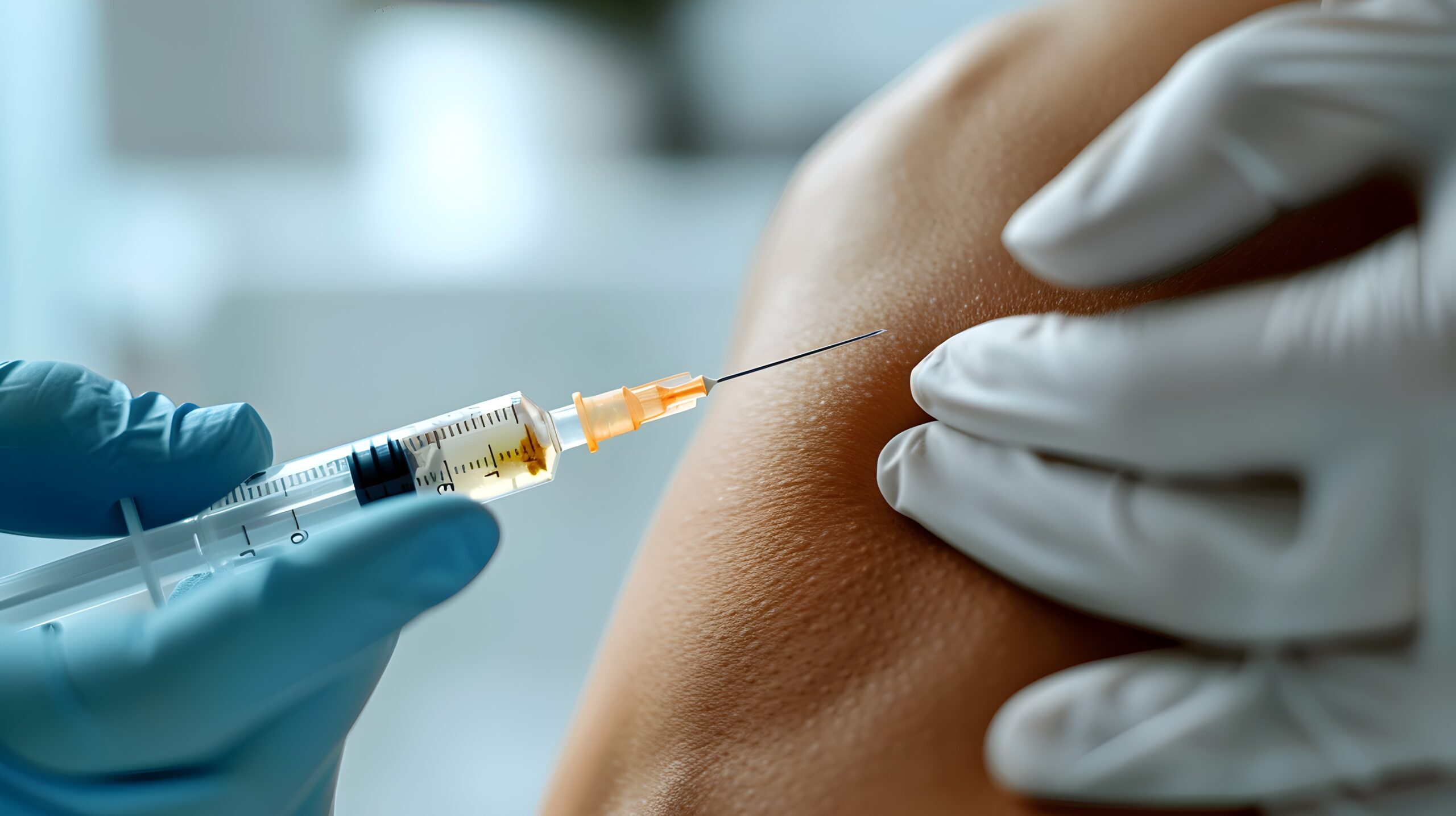
PRP (Platelet-Rich Plasma) orthopedic treatment is often discussed as a nonsurgical alternative therapy. For the right patient, it may provide another option when rest, physical therapy, medication, or other conservative approaches have not provided sufficient improvement.
But avoiding surgery isn’t the only potential role for PRP.
An emerging area of orthopedic treatment involves using PRP alongside surgery, including meniscal repair. In these cases, PRP can be applied at the time of surgery with the aim of supporting the body’s healing response around the repaired tissue.
For orthopedic surgeon Dr. Michael Schicker, this represents an interesting development in the use of PRP. The question is no longer always “PRP or surgery?” In selected cases, it can also be whether PRP has a useful role as part of the surgical treatment itself.
PRP and Meniscal Repair: The Short Answer
If you have a meniscal tear that requires surgery, it may sometimes be possible to repair and preserve the damaged meniscus rather than remove the injured tissue.
Surgery can physically repair the tear, but the tissue then has to heal. This can be challenging because blood supply varies considerably across different parts of the meniscus.
PRP may be used at the time of meniscal repair to support that healing process. It is prepared from the patient’s own blood and contains concentrated platelets, which release growth factors involved in the body’s natural response to injury and tissue repair.
A useful way of understanding the approach is:
Surgery provides the mechanical repair. PRP may provide additional biological support for healing.
Clinical research into PRP-assisted meniscal repair is still developing, but there is evidence suggesting that it may improve healing in certain types of meniscal tear. It isn’t appropriate for every injury, and results cannot be guaranteed.
For patients who want to understand why PRP is being considered for meniscal surgery and what the research has found, we look at the subject in more detail below.
What Happens When You Tear the Meniscus?
The menisci are two crescent-shaped pieces of cartilage within the knee that sit between the thighbone and shinbone. They help distribute load across the knee, absorb shock, and contribute to the stability and smooth movement of the joint.
A meniscal tear can occur suddenly during an injury, often involving twisting or rotation of the knee. Meniscal tissue can also become more susceptible to tearing as it changes with age.
Symptoms can include pain, swelling, stiffness, catching or locking, and difficulty fully moving the knee.
Importantly, not every meniscal tear needs surgery. Dr. Schicker will consider the nature and location of the tear, the patient’s symptoms, age, activity level, overall condition of the knee, and how much the problem is interfering with normal life before recommending treatment.
Why Repair the Meniscus?
When surgery is appropriate, preserving as much healthy meniscal tissue as possible can be important.
In the past, treatment frequently involved removing damaged meniscal tissue. Depending on the injury, modern orthopedic surgery may instead aim to repair and preserve the meniscus.
There is a good reason for doing so. The meniscus performs an important mechanical role within the knee, and loss of meniscal tissue is associated with an increased risk of degenerative change in the joint over time.
The success of a repair, however, depends not only on putting the damaged tissue back together, but also on what happens afterward.
Why Can Meniscal Healing Be Difficult?
One of the challenges is blood supply.
The outer portion of the meniscus has a better blood supply than the tissue farther toward the center of the knee. Because blood supply plays an important role in healing, the location of a tear can affect how readily repaired tissue heals.
The type and age of the tear and characteristics of the individual patient can also affect the outcome.
This has encouraged interest in biological techniques that might enhance the environment around the repaired tissue, including PRP.
How Is PRP Used During Meniscal Repair?
PRP is prepared from a sample of the patient’s own blood, which is processed to produce plasma containing a concentrated level of platelets. These platelets contain growth factors and other biologically active substances involved in healing and tissue repair.
During PRP-assisted meniscal surgery, Dr. Schicker carries out the surgical repair and stabilizes the damaged tissue. PRP can then be introduced at the repair site.
What Does the Research Say About PRP and Meniscal Repair?
One particularly relevant study was a prospective, randomized, double-blind, placebo-controlled trial published in 2018.
It involved 37 patients undergoing arthroscopic repair of unstable, complete vertical meniscal tears. Patients received either PRP or a saline placebo at the repair site during surgery.
The researchers reported a healing rate of 85% in the PRP-treated group compared with 47% in the control group. They also reported better results in several measures of knee function among the PRP-treated patients at longer-term follow-up.
These are encouraging findings, although the study was small and involved a particular type of meniscal tear. The results, therefore, cannot automatically be applied to every patient undergoing meniscal surgery.
A separate randomized, double-blind study looked at a different approach for patients with chronic degenerative meniscal lesions. Patients underwent percutaneous trephination: a technique that creates small channels intended to encourage a healing response, either with or without an additional PRP injection.
The overall success ratio was significantly better in the PRP group, and these patients were more likely to remain free from subsequent arthroscopy during follow-up. However, some individual measures of meniscal healing did not show a statistically significant difference.
The studies are not directly equivalent and should not be treated as though they are. What they do show is why there is clinical interest in whether PRP can help create a more favorable biological environment for meniscal healing.
Further research is needed to establish which injuries and patients are most likely to benefit.
Is PRP-Assisted Meniscal Repair Right for Me?
The first question is whether your meniscal tear requires surgery at all.
Some tears can be managed conservatively. If surgery is necessary, the next consideration is whether the meniscus can and should be repaired. Only then does the potential role of PRP become relevant.
Dr. Schicker will assess factors including the type and location of the tear, quality of the tissue, condition of the rest of the knee, and individual circumstances before recommending treatment.
PRP isn’t something that needs to be added routinely to every meniscal operation. Its value lies in using it selectively when there is a sound clinical reason for doing so.
PRP and Surgery Don’t Have to Be Opposing Treatments
PRP has become familiar to many patients as a treatment they might consider before surgery. PRP-assisted meniscal repair shows another side of its potential use.
When an injury needs to be surgically repaired, the two approaches don’t necessarily have to compete. Surgery and PRP can potentially perform different roles within the same treatment.
This is also one of the advantages of discussing treatment with an orthopedic surgeon such as Dr. Schicker who offers both surgical treatment and PRP. The objective isn’t to steer every patient toward one approach, but to use the treatment, or combination of treatments, that makes sense for the individual injury.
Talk to Dr. Schicker About Your Meniscal Tear
If you have been diagnosed with a meniscal tear, or persistent knee pain is affecting your movement, sports, work, or everyday activities, the starting point is an accurate assessment of the injury.
Dr. Schicker can determine whether your meniscal tear is likely to require surgery, whether repair may be appropriate, and whether there may be a role for PRP as part of your treatment.
Schedule a consultation with Dr. Michael Schicker to have your knee assessed and discuss the treatment options that may be appropriate for your meniscal injury.